Menu

Letting someone use your address might seem like a favor, but it can cause legal, financial, and privacy problems. Learn the risks and how to stay safe.
Introduction
People often ask to use someone else’s address for various reasons, such as receiving mail or proving residency. Although it might seem harmless, this decision can lead to serious consequences. You could face legal trouble, financial burdens, or even threats to your privacy. Therefore, understanding the potential risks before agreeing is essential.
In this guide, we’ll explain why people request to use an address, the associated dangers, and effective ways to protect yourself. If your credit has suffered due to someone misusing your address, The Notary Folks Credit Solutions can help. Book a Free Consultation today!
Quick Summary
- Using someone’s address with permission is not always illegal
- It becomes risky when used for official or financial purposes
- It can lead to fraud, credit issues, or legal complications
Why Do People Want to Use Your Address?
People may want to use someone else’s address for reasons like receiving mail, registering for services, proving a local presence, or setting up a business. In some cases, it’s for convenience or privacy, but it can also be used to bypass location or residency requirements.
Mail & Package Deliveries
- They want to prevent mail from getting lost.
- Individuals without a permanent home need a reliable address.
- Travelers and digital nomads seek a stable mailing address.
Residency & Legal Reasons
- They use an address to obtain driver’s licenses, enroll in schools, or secure insurance.
- Some register businesses at a residential address to avoid renting office space.
Credit & Financial Reasons
- They apply for loans or credit cards with a stable address.
- Using a different address may help improve a credit score.
- Some aim to qualify for financial aid or tax benefits.
Avoiding Legal or Financial Issues
In some cases, individuals may misuse an address to avoid creditors or legal obligations.
Legal Risks of Letting Someone Use Your Address
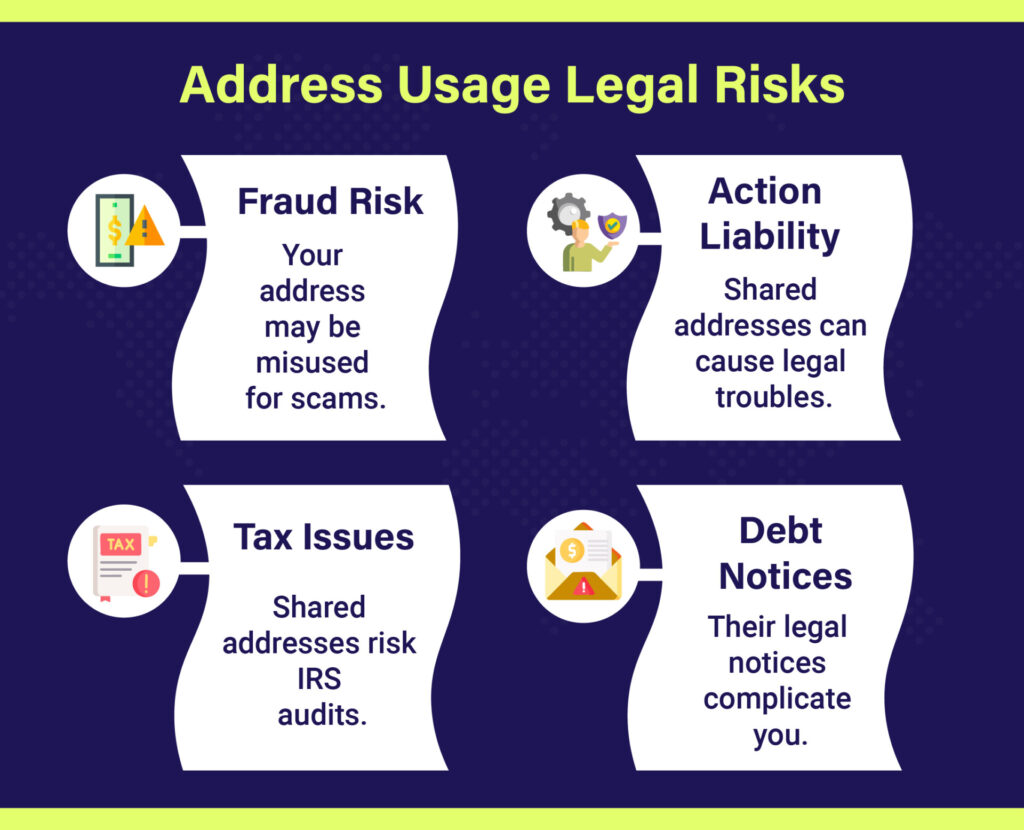
Increased Risk of Fraud or Identity Theft
They might use your address for scams or illegal activities.
If authorities investigate, your address could become involved.
Learn more about identity theft risks from the FTC.
Liability for Their Actions
- If they break the law, authorities may question you.
- Their financial or legal issues may affect you due to the shared address.
Tax and Government Issues
Incorrect address usage can lead to tax confussion or unwanted scrutinty from authorities.
Court Papers & Debt Notices
- You might receive legal documents or debt collection notices intended for them.
- Ignoring these documents can escalate legal complications.
Financial Risks You Might Face
Credit & Debt Problems
Debt collectors may mistakenly link unpaid bills to your address.
This can sometimes affect your financial records indirectly.
Want to learn how credit reporting works? check out this guide.
Higher Utility & Household Costs
- They could open utility accounts in your name, leaving you with unexpected bills.
- If they don’t pay their bills, those balances may affect your credit report.
Housing Issues
- Landlords or mortgage lenders might question why another person uses your address.
- Lease violations, higher insurance rates, or refinancing difficulties could arise.
Privacy & Safety Concerns
Receiving Their Mail
- You may receive their bills, legal notices, or government documents.
- Sorting through someone else’s mail can be frustrating and confusing.
Unexpected Visitors
- Law enforcement, debt collectors, or individuals searching for them could show up at your home.
Risk of Stalking or Harassment
- If they have unresolved legal trouble, dangerous individuals may visit your home.
What Happens If Someone Misuses Your Address?
If someone uses your address improperly, you may face:
- Unexpected debt collection notices
- Confusion with official or legal documents
- Possible fraud investigations linked to your address
- Privacy risks or unwanted contact from third parties
How to Protect Yourself?
Be Cautious Before Agreeing
- Ask why they need your address.
- Suggest alternatives like a P.O. box instead.
Use a Written Agreement
- If necessary, create a legal document outlining clear terms and limits.
- Define the duration and purpose of their address use.
Monitor Your Address Activity
- Regularly check your mail for unfamiliar letters.
- Sign up for credit monitoring to detect fraudulent activity linked to your address.
Contact Authorities if Necessary
- Report unauthorized use of your address to the post office or police.
- Seek legal assistance if someone refuses to stop using your address.
If unauthorized address use has harmed your credit, The Notary Folks Credit Solutions can help. Book a Free Consultation today!
What to Do If Someone Uses Your Address Without Permission?
Notify the Post Office
- Report unauthorized mail and ask about mail forwarding options.
- Return their mail marked “Not at This Address.”
Inform the Police
- File a police report if you suspect fraud or identity theft.
- Keep records of any related mail or documents.
Contact Credit Bureaus
- Place a fraud alert on your credit file.
- Review your credit report for unauthorized accounts.
Seek Legal Assistance
- Speak with a lawyer to understand your rights and options.
- Take legal action to remove their name from official records.
Frequently Asked Questions (FAQs)
Can I get in trouble for letting someone use my address?
Yes, you could face legal and financial issues if they commit fraud, evade taxes, or accumulate debts linked to your address.
What should I do if I keep getting mail for someone who doesn’t live here?
Mark the mail as “Return to Sender” and notify the post office. If it continues, you may need to contact authorities.
Is it illegal to use someone else’s address for mail?
Yes, using an address dishonestly to mislead authorities, gain financial benefits, or avoid legal trouble may be considered fraud.
How can I find out if someone is misusing my address?
Monitor your mail for unfamiliar letters, check your credit report for unknown accounts, and consider signing up for address monitoring services.
Can someone using my address affect my credit score?
Yes, if creditors or debt collectors link their unpaid debts to your address, it could impact your credit rating.
Is it illegal to use someone else’s address with permission?
Not always. It can be allowed for simple uses like receiving mail, but using someone else’s address for official, legal, or business purposes can be illegal—even with permission—if it involves misrepresentation or fraud.
Can someone use your address if they don’t live there?
It depends on how the address is used. With your permission, someone may use your address to receive mail. However, using your address for official, legal, or business purposes without actually living there can be considered misrepresentation or illegal in some cases.
Conclusion
Letting someone use your address may seem harmless, but it often leads to serious legal, financial, and privacy risks. From fraud to credit damage, the consequences can be severe. Always stay cautious and take proactive steps to protect yourself.
If someone’s misuse of your address has affected your credit, The Notary Folks Credit Solutions can help you regain control. Book a Free Consultation today!
Have you encountered this issue? Share your experience in the comments!